Summer Knitting With Cotton Yarn: Light Projects for Warm Days
Learn how cotton yarn differs from wool, how to keep your stitches even with a fiber that has little stretch, and three small warm-weather projects: a washcloth, coasters and a light headband.
A lap full of wool is not much fun in July, which is why summer knitting with cotton yarn is worth trying. Cotton feels cool in your hands, the projects it suits are small enough to carry outdoors, and most of them are useful around the house the moment they come off the needles.
Cotton does behave differently from the wool or acrylic you may have learned on. Knowing what to expect makes the switch much smoother.
How cotton differs from wool
The biggest difference is stretch. Wool fibers are springy, so a wool stitch that has been pulled out of shape tends to bounce back. Cotton has little stretch and very little bounce, so the stitches stay where you put them.
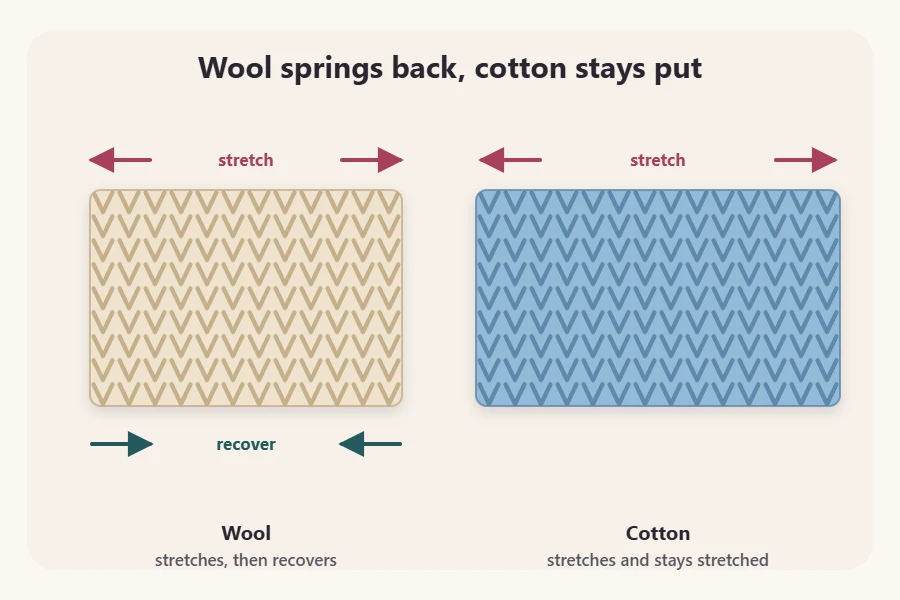
That has a few practical effects:
- Uneven stitches show more. Wool evens itself out a little as it relaxes. Cotton keeps a record of every tight and loose stitch.
- Stitch patterns look crisp. The same lack of fuzz and bounce gives cotton clear, well-defined stitches, which is lovely in simple textures.
- The fabric is heavier. A cotton piece weighs more than the same piece in wool and can grow longer under its own weight, which is one reason small projects suit it best.
- It absorbs water. That is exactly what you want in a cloth for the kitchen or bathroom.
- Ribbing is less elastic. Cotton rib still pulls in, but it does not snap back the way wool rib does.
Choosing cotton yarn
For a first cotton project, look for a worsted-weight cotton, labeled medium or #4, in a light, solid color. Smooth, tightly twisted yarns are easier than loosely twisted ones, whose plies separate easily under the needle tip.
Cotton blended with another fiber such as acrylic or bamboo is usually softer, lighter and a little stretchier than pure cotton. Pure cotton is the firmer, more absorbent choice for dishcloths and washcloths. The yarn label tells you which you are holding, and the guide to the best yarn for beginner knitters explains how to read the rest of it.
Tips for knitting with cotton
- Use wood or bamboo needles. Smooth cotton slides quickly on metal. A grippier needle keeps stitches from escaping off the tips.
- Relax your hands. Since the yarn will not give, tight stitches are hard to get the needle into and tiring to work. If your hands ache, loosen your grip and take a break.
- Aim for a firm fabric, not tight stitches. The dishcloth on this site uses US 7 (4.5 mm) needles, one size smaller than the US 8 (5 mm) used for worsted wool. The smaller needle makes the fabric dense, so you do not need to pull the yarn hard.
- Watch for split stitches. If the needle goes through the middle of the strand instead of under the whole stitch, slide it out and try again.
- Weave ends in thoroughly. Cotton is smooth, and tails can work loose in the wash. Weave each one through the wrong side for about 2 inches, change direction once, and trim only after the first wash.
If your rows look uneven at first, that is normal with cotton and it improves with practice. The article on knitting tension covers how to hold the yarn so it feeds through your fingers at a steady rate.
Tip
Wash and dry a finished cotton piece before you judge it. A first wash settles the stitches and hides a surprising amount of unevenness.
Three light projects for warm days
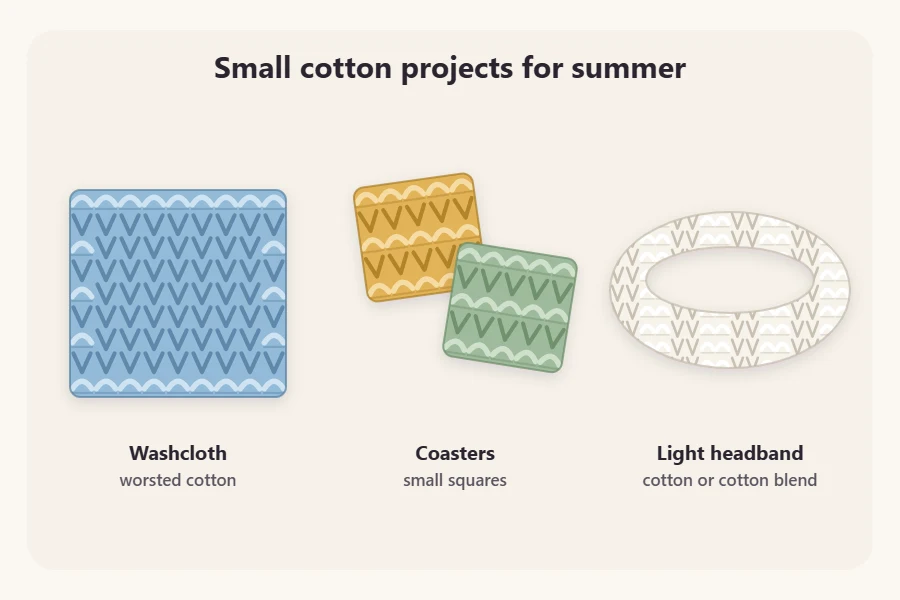
A washcloth or dishcloth
This is the project cotton is known for. The easy knit dishcloth pattern uses about 60 yards of worsted-weight cotton on US 7 (4.5 mm) needles. You cast on 36 stitches, knit 4 rows, work a stockinette center with 3 knit stitches at each edge, and finish with 4 more knit rows. The result is about 8 inches (20 cm) square, and it works equally well as a face cloth.
A set of coasters
A coaster is a tiny garter-stitch square and a good way to use up the ends of a ball. With worsted-weight cotton and US 7 (4.5 mm) needles, cast on about 18 stitches and knit every row until the piece is as tall as it is wide, roughly 4 inches (10 cm), then bind off.
To check for square, fold one corner over diagonally to the opposite edge. When the edges line up, you are there. Garter stitch lies flat on its own, so a coaster needs no border. Make four in the same color for a set, or one in each color you have left.
A light headband
The 2×2 rib headband also works in worsted-weight cotton or a cotton blend for warm weather. It takes about 60-70 yards on US 8 (5 mm) needles: cast on 18 stitches and work knit 2, purl 2 ribbing to about 19 inches (48 cm), or about 2 inches less than your head measurement, before seaming the short ends.
Watch out
Cotton rib does not spring back like wool rib, so a cotton headband can loosen as you wear it. Pin the ends together and try it on before you sew the seam, and choose a cotton blend if you want more stretch.
Finishing and caring for cotton
Bind off at the same relaxed pace as the rest of the piece. A cotton edge has no give, so a tight bind-off puckers and stays puckered. The guide on how to bind off shows how to keep the edge loose.
Most cotton yarns can be machine washed, which is part of their appeal for kitchen and bath items, but check the label, because blends vary. Some cotton shrinks slightly in a hot wash or a hot dryer, and deep colors can release dye the first time, so wash those separately at first.
A cotton piece that has stretched out in use usually tightens up again after washing and drying. Pat it back into shape while damp and let it dry flat.
What to save for cooler weather
Large, heavy pieces are the ones to avoid in cotton while you are learning. A full-size scarf or a blanket in pure cotton is weighty, tends to stretch lengthwise and takes a long time to dry. Those projects are better suited to wool, acrylic or a blend, and they will still be there in the fall.
Frequently asked questions
Is cotton yarn hard for beginners to knit with?
It is a little less forgiving than wool because it has almost no stretch, so tight stitches are harder to work and uneven ones are easier to see. It is still very manageable on a small project. Grippy wood or bamboo needles and a relaxed hold make the biggest difference.
Why do my hands hurt when I knit with cotton?
Cotton does not give, so pulling each stitch tight means forcing the needle into a rigid loop, and that takes effort. Try loosening your grip on both the yarn and the needles, let the needle size set the stitch size, and stop to rest when your hands feel tired.
Can I use cotton yarn for a scarf?
You can, though pure cotton makes a heavy scarf that tends to lengthen with wear and is not especially warm. A cotton blend in a lighter weight gives a better result for a warm-weather wrap. For a first cotton project, a small cloth or coaster is a safer place to start.
